Our Active Research
The main topics our lab works on.
Our work gathers around one question: how does subjective experience leave a trace in measurable signals? In every project we run the experimental design, recording and analysis ourselves.
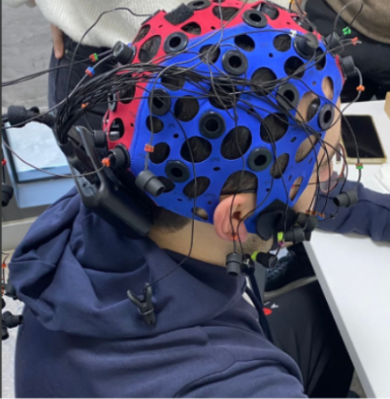
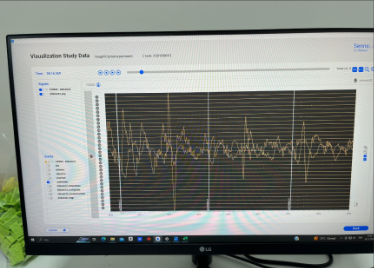
- Emotion, taste and preferenceWe study how a product’s label changes its taste, and how the positive or negative emotional response during tasting can be told apart from EEG.
- Brand trust and decision-makingWe study what happens in the brain at the moment we trust a brand by looking at how EEG patterns cluster on their own, without imposing labels.
- Music and the brainWe study how the emotion perceived in Turkish makam music and the emotion the listener actually feels are reflected in EEG and skin conductance.
- fNIRS with embedded AIWe are building a wearable, whole-head fNIRS system that runs AI on the device itself.
- Multimodal biosignalsWe use EEG and skin conductance together to measure consumers’ emotional response to product mascots, and study which dimension of emotion each signal carries.
Our Past Research4
Estimation of Human Emotions Under Product Image Stimuli Using EEG Signals
Deep learning approaches were compared to estimate emotional responses elicited by different product mascot designs using EEG signals. Spectral and statistical EEG features were transformed into topographic maps and analyzed using AlexNet, Inception, and Vision Transformer (ViT) architectures for emotional valence and arousal classification.
Estimation of Human Emotions from EEG Signals Using Artificial Intelligence Methods
Machine learning and deep learning approaches were compared for estimating emotional valence and arousal from EEG signals using the DEAP dataset. Time-domain and spectral EEG features, along with topographic brain maps, were used to evaluate the emotion classification performance of Random Forest, XGBoost, SVM, deep neural networks, 2D-CNN, and ResNet-18 models.
Investigation of the Impact of Aircraft Noise on Attention and Mental Workload Using EEG and PPG
The effects of aircraft noise levels on attention and mental workload were investigated using EEG, PPG, and behavioral performance data collected from 30 participants performing n-back tasks. EEG features were analyzed using machine learning methods to evaluate cognitive and physiological responses under different noise conditions.
Investigation of the Effects of Environmental Noise on Cognitive Performance Using EEG and Machine Learning
The effects of environmental noise levels on attention, working memory, and mental workload were investigated using EEG, PPG, and 2-back tasks. Features extracted from EEG signals were analyzed using Support Vector Machines (SVM) and Random Forest algorithms to evaluate cognitive responses under different noise conditions. Research derived from this project was also published as a conference paper at TIPTEKNO 2024.